
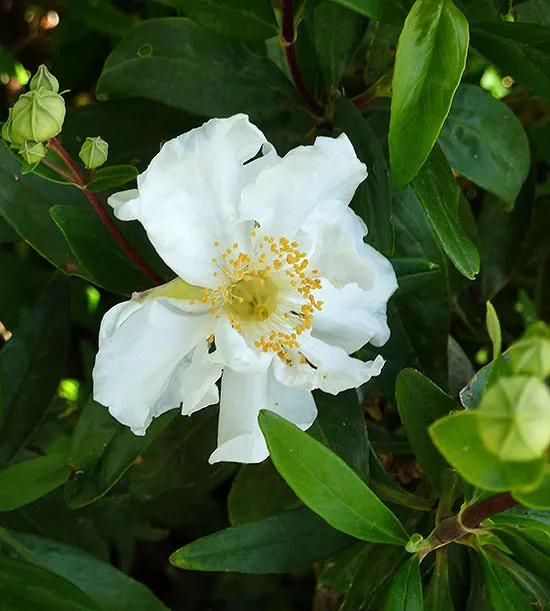
The sparkling white flowers of bush anemone (Carpenteria californica) bring welcome relief to hot afternoons. A rare evergreen shrub native to California, bush anemone is an excellent plant for the back of a perennial border or an informal hedge. It bears clusters of fragrant, 2- to 3-inch white flowers with yellow stamens. It grows well in full sun or part shade and tolerates a range of soil conditions, but it does best in well-drained soil. It is tough and thrives on neglect: Don’t fertilize it and water only during periods of extended drought.
Bush Anemone Overview
| Genus Name | Carpenteria californica |
| Common Name | Bush Anemone |
| Plant Type | Shrub |
| Light | Part Sun, Sun |
| Height | 4 to 8 feet |
| Width | 4 to 8 feet |
| Flower Color | White |
| Foliage Color | Blue/Green |
| Season Features | Summer Bloom |
| Special Features | Cut Flowers, Low Maintenance |
| Zones | 10, 8, 9 |
| Propagation | Seed, Stem Cuttings |
| Problem Solvers | Drought Tolerant, Good For Privacy |
Where to Plant Bush Anemone
Bush anemone thrives on dry granite ridges of the southern Sierra Nevada foothills in a limited area of California near Fresno. This rare shrub is accustomed to lengthy, hot, dry summers. Gardeners who can replicate the plant’s natural environment can grow it outside California in USDA Zones 8–10. It is an excellent addition to a Mediterranean garden, the back of a border, or grown against a wall.
How and When to Plant Bush Anemone
This shrub is challenging to find in garden centers, although some online specialty shops have them. Whether you are one of the lucky gardeners who locates a bush anemone or you start your own plants indoors via seed or stem cuttings, transplant the shrub outdoors in fall to an area with well-draining soil and full or part sun. Dig a hole large enough for the transplant’s root system to fit without being crowded. Place the transplant in the hole and fill around it with the soil you removed from the hole. Press down gently to remove air pockets. Water the transplants and continue to water them until they are established.
If planting several shrubs, space them about 6 feet apart.
Bush Anemone Care Tips
Light
Bush anemones grow well in full sun, although dappled shade is acceptable in most areas and preferable in the hottest climates.
Soil and Water
Bush anemone grows well in a range of ordinary garden soils, but the soil must be well-draining.
After the shrub is established, cut back on water and keep the first couple of inches of soil dry. This drought-tolerant shrub needs water only during periods of extended drought. However, a single deep watering in midsummer can spur new growth and more blooms.
Temperature and Humidity
This plant loves the heat and tolerates cold temperatures as low as 10°F, depending on variety.
Fertilizer
Bush anemone shrubs don't benefit from fertilizer.
Pruning
Bush anemones usually have an attractive rounded shape and need little pruning. If their habit becomes loose, cut the shrub back by a third after it flowers.
Pests and Problems
When bush anemone shrubs are healthy and not overwatered, they exhibit few problems with insects or disease. Aphids are sometimes attracted, but they can be treated with a blast of water from a garden hose or a spray of neem oil.
How to Propagate Bush Anemone
Bush anemone can propagated by stem cuttings or seed.
Cuttings: In spring or early summer, cut 4 to 6 inches from the end of a bush anemone stem that doesn’t have any flowers attached. Make the cut just below a leaf node. Remove any foliage from the bottom half of the stem and dip the end in rooting hormone. Insert the end into a small pot filled with a peat moss and perlite mix, and place it indoors in bright indirect light. Keep the soil moist but not wet. After two or three new leaves form, harden off the cuttings and transplant them to their permanent location outdoors.
Seeds: Prepare a seed flat or several small pots with a peat moss and perlite mix. Thinly sow the seeds atop the mix, and lightly press down on them. Place the seed tray or pots in bright indirect light indoors. Mist the growing media lightly to keep the seed moist. The seeds germinate in anywhere from a week to a month. When the seedlings are 2 inches tall, begin bottom watering them and remove any weak seedlings. Repot the seedlings after they develop their second set of true leaves. Slowly harden them off outdoors and transplant them when they can tolerate a full day of sun.
Types of Bush Anemone
‘Elizabeth’
Carpenteria californica ‘Elizabeth’ is the most available cultivar. It produces more flowers—although slightly smaller—than other bush anemone shrubs. The flowers appear in early spring throughout summer and sometimes extend into early fall. This low-care shrub reaches a height of 6 feet in about five years. It is cold-hardy to 15°F to 20°F.
‘Bodnant’
Carpenteria californica ‘Bodnant’ is an excellent wall shrub. It is covered with white blooms throughout the warm summer months. This slow grower takes about 10 years to reach a full height of 8 feet. It is bee-friendly and attracts butterflies and moths. ‘Bodnant’ tolerates temperatures as low as 23°F.
‘Ladhams Variety’
Carpenteria californica ‘Ladhams Variety’ bears large 3-inch flowers in spring and summer. It is an excellent addition to a shrub border and grows 4-6 feet tall and much taller when grown against a wall.
Bush Anemone Companion Plants
Manzanita
Manzanita is a genus of evergreen shrubs or trees native to California, the North Coast Range, and the Sierra Nevada mountains. Like bush anemone, once manzanita is established, it doesn’t need to be watered in the summer.
California Bay Laurel
Adaptable and easy to grow, California bay laurel is native to the West Coast. It grows best in full sun to partial shade and can grow as much as 4 feet each year in the right conditions. The evergreen bears fragrant yellow flowers in late winter and early spring, followed by inedible olive-like fruits that draw in birds and squirrels.
Desert Mallow
Brighten a hot, dry garden with easy-care desert mallow. Like bush anemone, desert mallow grows best with limited watering. It bears 2-foot-tall spikes of orange flowers almost year-round, and it thrives in full sun.