
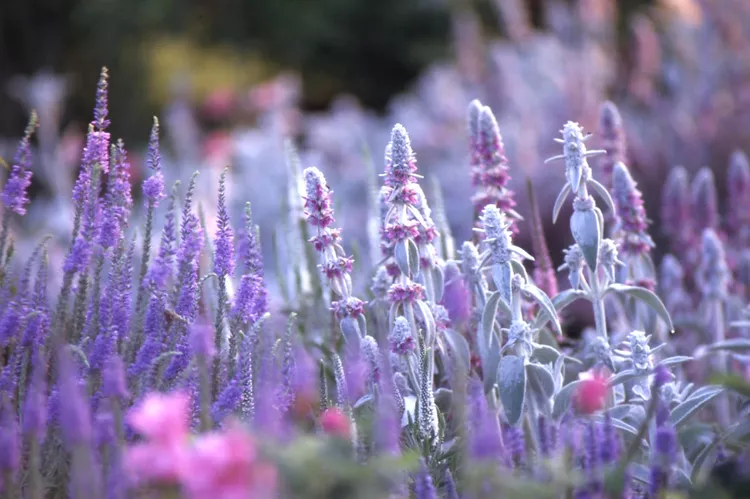
Some perennials and bulbs are more rabbit-resistant plants than others, but few are truly rabbit-proof. That’s because, like people, different rabbits have different favorite foods. Also, like people, when rabbits are hungry enough, they’ll eat just about anything. However, these 19 flowering perennials and bulbs are lower on the menu, thanks to textures, scents, or other characteristics that bunnies find unpalatable.
Allium
From the cute 6-inch-tall rock garden types to the 6-foot-tall giants, alliums are easy-to-grow bulbs that come in a vast variety of colors. Alliums, or ornamental onions, are rabbit-resistant perennials due to their pungent smell. They’re usually planted at the front of garden borders or near tender lily bulbs to act as an animal deterrent and to provide a whimsical landscape design.
Growing Conditions: Full sun to part shade in well-drained soil on the drier side
Size: 6 inches to 6 feet tall
Zones: 3-10, depending on variety
Anise Hyssop
An incredibly rugged North American native plant, anise hyssop produces spikes of violet-blue flowers from midsummer to fall. The flowers and the foliage both smell like anise, giving the plant its common name. They’re also known to produce nectar that’s irresistible to hummingbirds and butterflies, so try creating a beautiful butterfly garden with this plant.
Growing Conditions: Full sun and well-drained soil
Size: 2-6 feet tall, depending on variety
Zones: 4-10, depending on variety
Astilbe
A popular plant for shade gardens, the rabbit-resistant plant astilbe sends up feathery plumes of pink, white, and red in early summer. Its glossy divided foliage adds wonderful texture and color to a small-space shade garden. Look for varieties with bronzy tones infused in the leaves for extra color even after the blooms fade.
Growing Conditions: Part to full shade and consistently moist soil
Size: 1-3 feet tall
Zones: 4-8
Baptisia
One of the toughest plants in the garden, baptisia has spikes of violet, blue, yellow, or white flowers and attracts bees in early summer. This drought-tolerant perennial has blue-green foliage that continues to look stunning all the way to frost. After blooming, its clusters of showy seed pods dry out as they mature and create a unique rattling noise in the breeze.
Growing Conditions: Full sun and well-drained soil
Size: 5 feet tall
Zones: 3-9
Bee Balm
Rabbits may not like bee balm, but hummingbirds sure do. It’s one of the best nectar plants for pollinators. This easy-growing plant produces lots of pink, red, violet, or white flowers from summer to early fall. The flowers are long-lasting and beautiful for cut bouquets.
Growing Conditions: Full sun and moist, well-drained soil
Size: 1-3 feet, depending on variety
Zones: 4-9
Catmint
Catmint is a perfect companion for hybrid roses with gray-green foliage and clusters of blue, violet, pink, or white flowers throughout the summer. This rabbit-resistant plant tolerates heat and drought well. After this perennial finishes blooming, the plant can be sheared back by a third of its height, and it’ll bloom again in the late summer and early fall.
Growing Conditions: Full sun and well-drained soil
Size: 1-2 feet tall
Zones: 4-8, depending on variety
Daffodil
While many spring bulbs are rabbit magnets, daffodils are among the few bulbs that pesky critters avoid. These bulbs bloom in shades of red-orange, orange, yellow, white, coral, and pink and offer a variety of flower shapes. By planting both early and late-blooming types of daffodils, you’ll enjoy a whole month of bloom in the yard and spring bouquets.
Growing Conditions: Full sun to part shade and well-drained soil
Size: To 1 foot tall
Zones: 3-9, depending on variety
Daylily
One of the hardiest garden plants, daylilies bloom in a rainbow of shades and can take all but the most challenging conditions. This low-maintenance plant can easily be divided to create more individual plants for the garden. Select from the many easy-to-grow daylily varieties available and grow them in a sunny spot.
Growing Conditions: Full sun to part shade and well-drained soil
Size: 2-6 feet tall, depending on variety
Zones: 3-10, depending on variety
Foxglove
A cottage-garden favorite, foxglove produces spikes of pink, rose, white, and yellow flowers. Though many common varieties are biennial (meaning they typically live only about two years), they self-seed if you don’t deadhead the flowers. Especially when in bloom, this easy-to-grow perennial prefers moist, well-drained soils, so make sure to give it plenty of water during extended dry periods.
Growing Conditions: Part shade and moist, well-drained soil
Size: 2-6 feet tall, depending on variety
Zones: 3-8, depending on variety
Fritillaria
One of the more underutilized spring bulbs in the home garden is fritillaria. This interesting bulb offers a wide variety of flower colors, forms, and sizes. Crown imperial is one of the most popular species. When it blooms, it’s one of the most flamboyant plants in the spring garden, with red, yellow, or orange flowers topped by a crown of leaves. The bulbs’ faint skunky odor makes it a rabbit-resistant plant.
Growing Conditions: Full sun to part shade and well-drained soil
Size: 6 inches to 4 feet tall
Zones: 3-9, depending on variety
Hellebore
A nearly indestructible shade garden plant, hellebores bloom in late winter or early spring and produce black, red, pink, white, cream, or green flowers. Sometimes called the Lenten rose, hellebores are a dainty bloom, one of the first beautiful flowers to announce the arrival of spring. In many climates, the plants are semi-evergreen.
Growing Conditions: Part to full shade in moist, well-drained soil
Size: 1-2 feet tall
Zones: 4-9, depending on variety
Iris
A rabbit-resistant plant, irises offer gorgeous flowers in a rainbow of colors. Most types of iris bloom from spring into early summer. Reblooming irises offer the extra advantage of blooming again in fall. Their upright blade-like foliage has an eye-catching form, even when the plants aren’t in bloom.
Growing Conditions: Full sun to part shade and well-drained, moist soil
Size: 1-3 feet tall
Zones: 3-9
Lamb’s Ear
An excellent ground cover for sunny spots, lamb’s ear is adorned with soft, fuzzy silvery leaves that rabbits tend to avoid. Though the leaves are its best feature, lamb’s ear also produces spikes of pink flowers throughout the summer. This low-care plant is wonderfully drought resistant, too, so you can plant it and enjoy it without much care.
Growing Conditions: Full sun and well-drained soil
Size: 18 inches tall
Zones: 4-8
Lavender
One of the more ornamental herbs, lavender produces wonderfully fragrant foliage and flowers. The blooms typically appear in shades of violet and white and can be preserved as a dried flower for use in sachets and other craft projects. To successfully grow lavender, plant it in well-drained alkaline soil that easily allows water to pass through it.
Growing Conditions: Full sun and well-drained soil
Size: 1-2 feet tall
Zones: 5-8, depending on variety
Lungwort
Lungwort is as attractive as it is rabbit-resistant. This popular shade perennial comes in a number of varieties that offer sprays of pink or blue flowers in the spring. The pretty spotted or variegated foliage adds interest when the plant isn’t blooming and has a rough texture that rabbits tend to avoid.
Growing Conditions: Part to full shade and consistently moist, well-drained soil
Size: To 1 foot tall and 2 feet wide
Zones: 2-8
Peony
Known for their huge blooms, peonies are as rabbit-resistant as they are beautiful. These long-lived perennials are resilient if you stake up their heavy late springtime flowers to keep them from spilling on the ground after heavy rain.
Growing Conditions: Full sun and well-drained, moist soil
Size: 2-7 feet tall, depending on variety
Zones: 3-8, depending on variety
Salvia
A whole host of salvia varieties are great picks for hot, dry sites where you want tons of color all season. All salvia varieties attract hummingbirds, and most are rabbit-resistant plants. The blooms range from bright red to shades of purple and blue.
Growing Conditions: Full sun and well-drained soil
Size: 1-5 feet tall, depending on variety
Zones: 3-9, depending on variety
Veronica
A perennial that’s easy to love is veronica because it blooms all summer. The flower spikes appear in cheery shades of blue, pink, and white. This easy-to-grow perennial adds great texture to many other front-of-the-border plants.
Growing Conditions: Full sun to partial shade and well-drained soil
Size: 1-2 feet tall
Zones: 3-8
Yarrow
Known as a hardy, drought-resistant perennial, yarrow works well in sun-loving cottage garden settings and wildflower gardens. This rugged rabbit-resistant plant blooms through the summer in shades of yellow, pink, red, and white. The long-lasting flowers are great for those fill-in spots in bouquets.
Growing Conditions: Full sun and well-drained soil
Size: 2-3 feet tall
Zones: 3-9, depending on variety