
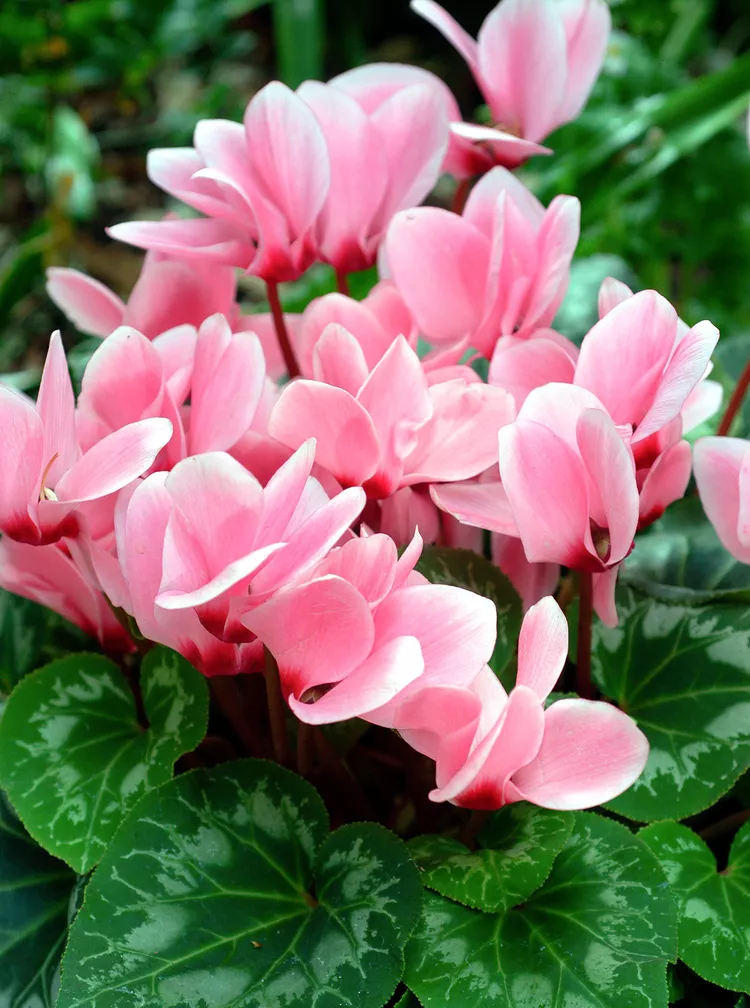
When you need a quick addition of colorful flowers to brighten up your home during the winter, grab a few indoor cyclamen (Cyclamen persicum) at the grocery store or garden center. These potted plants are popular holiday gifts, both for Christmas and Valentine's Day, thanks to their red or pink flowers and pretty green, heart-shaped leaves that often have silver patterns. This guide will help you care for your indoor cyclamen so it will bloom for weeks in winter, plus you'll get tips for helping your plant bloom again the next year.
Indoor Cyclamen Overview
| Genus Name | Cyclamen persicum |
| Common Name | Indoor Cyclamen |
| Additional Common Names | Persian Cyclamen, Florist's Cyclamen |
| Plant Type | Houseplant, Perennial |
| Light | Shade |
| Height | 6 to 8 inches |
| Width | 6 to 8 inches |
| Flower Color | Pink, Purple, Red, White |
| Foliage Color | Blue/Green |
| Season Features | Winter Bloom |
| Zones | 10, 11, 9 |
| Propagation | Seed |
All parts of cyclamen are toxic to dogs and cats so keep these plants away from pets.
Indoor Cyclamen Growing Tips
Indoor cyclamen are tender perennials that go dormant in the spring and summer, which is why many people think they’ve killed their plant when in fact it's just resting. Cyclamen follow the weather patterns of their ancestors, the wild cyclamen of the southern and eastern Mediterranean, where it rains in the winter but not the summer. With a little extra attention, you can keep your indoor cyclamen going through its summer dormancy and bring it back into bloom in the fall.
Note: Florist's cyclamen are intended for indoor growing and are not the same as hardy cyclamen that thrive outdoors. So don’t pop your indoor cyclamen outside for fresh air if there’s a break in the winter weather.
Indoor Cyclamen Care Tips
Cyclamen have similar care requirements to most other houseplants, requiring bright but indirect light and consistently moist but not soggy soil. However, they're more particular about temperatures and watering at specific times of the year.
Light
Light from a north-facing window is likely not enough to keep an indoor cyclamen blooming unless you provide grow lights. Instead, choose a room flooded with sunlight from the south or west and place the cyclamen where the sun's rays don't hit it directly. If that’s not possible, try a windowsill in a room with an eastern exposure. The morning sun will be helpful but won’t last long enough to bake the plant.
Soil and Water
As soon as the top of the soil feels dry, add enough water to moisten the soil. Avoid splashing the leaves and make sure the excess water drains away from the plant. Moist but not soggy soil is the goal. Soggy soil can encourage fusarium wilt disease that can kill your plant, so no sitting in a puddle allowed.
Monitor the soil moisture closely by touching the top of the soil. Cyclamen can dry out quickly (especially the miniature cyclamen in their small pots) and may not recover once the soil is parched. When your plant needs more moisture, try one of these recommended ways to water a cyclamen:
- Take the plant to the sink, run a trickle of room temperature water, soak the soil without splashing the leaves or the crown at the center of the plant, then let the water drain out completely.
- In lieu of the sink faucet, use a watering can with a narrow spout, and follow the steps above.
- Put 1 inch of room temperature water in a bowl, set the cyclamen's pot in it for 20 minutes, then remove the plant and let excess water drain away.
Florist’s cyclamen will stop blooming in April and the yellowing leaves are the signal that the plant is going dormant. Once the cyclamen has gone completely dormant, only water lightly every two weeks. When you see green leaf tips showing in the fall, start watering normally and fertilizing again to fuel the new growth.
Temperature and Humidity
Indoor cyclamen thrive with daytime temperatures from 60-65°F (maxing out at 68°F) and nighttime temperatures in the 50s (no lower than 40°F). If you keep your house at 70°F or warmer, the higher temperatures will feel like summer to the cyclamen, cueing it to stop blooming and go into dormancy.
Indoor cyclamen prefer humid air. Keep your plant satisfied by placing it on a tray of pebbles, with water that never touches the base of the pot. As the water evaporates, it will raise the humidity around your plant. Or put your potted cyclamen in an open or closed terrarium to ramp up the humidity. Miniature cyclamen can look especially jewel-like in a tiny terrarium.
Fertilizer
Use a low-nitrogen, liquid houseplant fertilizer diluted to half strength during your cyclamen's growing and blooming time, from September through April. Skip the fertilizer while your plant is dormant in the summer.
Pruning
A healthy indoor cyclamen will produce many flowers and leaves throughout the blooming season. Remove the dead flowers and leaves to encourage more flowering and keep the whole plant looking tidy. Tug or snip off each dead flower stalk or leaf at its base.
Potting and Repotting Indoor Cyclamen
After keeping your cyclamen blooming year after year, eventually you will need to repot your plant into a slightly larger container. When your plant outgrows its pot, wait until fall when new growth appears and then move it to a larger container. Provide fresh houseplant potting mix to ensure good drainage. Keep the top of the cyclamen tuber showing above the soil, like you had in the original pot. Use a clay pot to reduce chances of soggy soil.