
Put old-fashioned color favorites — pink and purple — to work in your flowerbeds with these new-style garden compositions.
Keep It One and the Same
Consistency in plant type can also provide diversity in color, as shown by this bountiful pairing of different shades of hydrangeas. From pale pink to rich salmon and light purple, the uniform grouping offers a subdued yet interesting rainbow of pastel colors.
Rely on Color Clusters
Another way to combine color is to group the same hue in shifting blocks of plants. Here a flowerbed shifts from purple and pink in the front — stonecrop and dianthus — to purple wild indigo, then foxglove in a deeper shade of fuchsia in the back.
Practice Repetition
In this lush flowerbed, dianthus, catmint, and foxglove are lively and vigorous choices that gradually fill out the garden space. The design is duplicated down the length of the bed, which is an effective method for offering different blooms while maintaining a two-color composition.
Alternate the Colors
Petunias are a garden favorite, and for good reason: They're reliable bloomers that can withstand a variety of conditions and climates. Here, waves of pink and purple petunias edge a path and provide low-growing groundcover.
Use Color for Drama
Go big, go bold: That's the strategy with this showy combination of pink peony, purple iris, and fuchsia shrub rose. Plants that offer oversize blooms or rich colors also do the job of creating a focal point, particularly in a large flowerbed.
Be Fearless with Flowers
Pink and purple is a beloved garden combo, but it can get boring in a hurry, particularly with similar plants and ho-hum foliage. That's when it's time to spice up a garden bed with diverse bloom styles, such as this large purple flowering clematis contrasted with the vertical spikes of pink lupines.
Stick to Tradition
Pink and purple remains a classic cottage garden combination. In this case, the delicate hues and dainty blooms of California poppies and anemone supply no-fuss growth and never-fail good looks.
Embrace Foliage
Plants that flower are a natural choice for adding color to a garden, but don't neglect growers that supply more foliage than blooms. The tradeoff is texture and variety, such as the distinctive purple leaves of purple mint, subtly contrasted by pink roses, fuchsia catchfly, and purple perennial geranium.
Make Purple the Boss
There's no need to maintain equality when it comes to color pairing in the garden. In fact, giving one hue the upper hand, as with the broad swaths of purple larkspur in this bed, means the intermittent bursts of pink poppy have even more impact.
Try Unexpected Shades
The pastel shades of pink and purple have long been flower crowd-pleasers, but the more unusual ends of the color spectrum can demonstrate just as much garden flair. Here, neon pink blossoms of primrose pick up the hybrid green-purple foliage of flowering cabbage; the hot hues are tempered by paler shades of twinspur and osteospermum.
Go Casual
Astilbes — a shade favorite — also do the gardener a favor by providing nearly limitless color options in the pink-purple spectrum. In this rambling woodland bed, there's no distinguishable pattern to the colors, but the random placement of plants works, in part because the hues — from pale pink to deep fuchsia — are complementary.
Stick to the Rules
Pink and purple put on an exuberant display in this lushly casual garden. But while there's seemingly no order to the plantings, the flowerbed actually relies on tried-and-true gardening rules: shorter plants in front, similar varieties planted in clusters. It's a garden that also favors the specimen collector — there are no less than eight plants, including bachelor's buttons, cosmos, cleome, coneflower, verbena, rose mallow, ageratum, and zinnia.
Take Center Stage
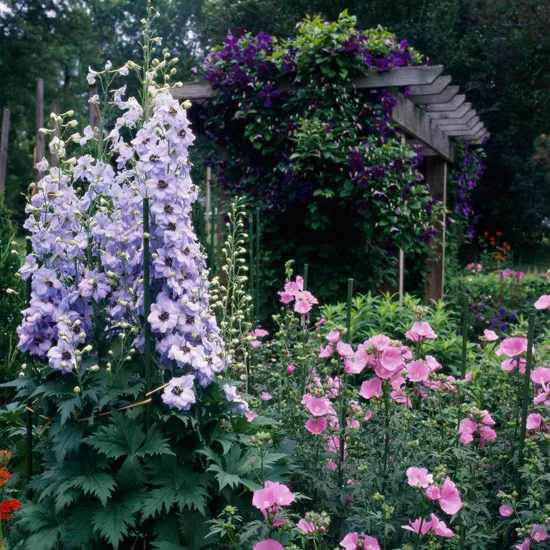
This cheerful combination of old-fashioned garden favorites offers enough blooms to please any gardener. What it does even better is use big groupings of single species — the clematis over the arbor, delphiniums in the back, hollyhocks closer to the front — to put the spotlight on showy flowers.