
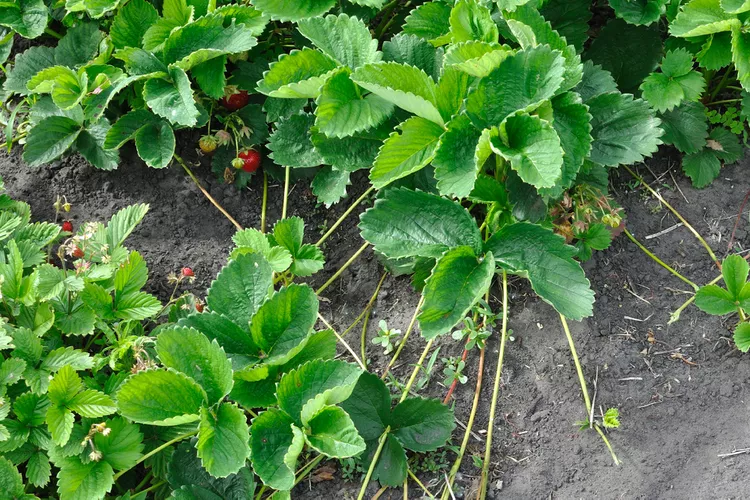
In your strawberry patch, you've probably noticed long, thin stems or runners growing out from each plant. You may have wondered what to do with these strawberry runners growing every which way, and the baby plants growing along them. Those little strawberry plants are an easy (and free!) way to propagate your existing plants so you can either expand or renew your berry patch. However, runners produce a lot of new little plants, so things can get crowded fast unless you step in. Here's what you need to know to successfully plant strawberry runners in your garden so you'll always have plenty of fruit to harvest.
What Are Strawberry Runners
Strawberry runners (also called stolons) are horizontal stems that grow along the ground. Each runner produces several new "daughter" plants that are still attached to the original "mother" plant. A daughter plant will grow roots where it touches the soil. Once the new plant is established on its own roots, the runner will dry up to separate the daughter from the mother plant. June-bearing strawberries send out many runners after fruiting and are often more vigorous than everbearing strawberries. Day-neutral plants produce almost no runners.
Test Garden Tip
For strawberry plants that are less than a year old, cut off all runners so the plant directs all its energy into its own growth.
How to Plant Strawberry Runners in Pots
One way to create new strawberry plants from runners is to help them root in pots. This method is especially useful when you want to move the new plants elsewhere. This technique also helps you be selective about the number of runners to leave on the plant. Keep only the number that you want, and cut off the rest to help the mother plant channel more energy into fruit production for harvesting and create only the daughter plants you want. Here's how to root runners in pots.
- Select no more than four strong runners from each healthy strawberry plant and extend the runners out from the mother plant.
- Fill 3-inch pots with fresh potting soil.
- On each runner, choose a healthy daughter plant that is nearest to the mother plant.
- Under the daughter plant, use a trowel to dig a hole big enough to bury one of the pots in.
- Place the pot in the hole so that the rim is level to the ground.
- Using a 6-inch piece of galvanized wire bent into a U-shape, pin the runner to the soil in the pot. Don't cut off the runner between the mother plant and the daughter plant, but you should pinch off the end of the runner extending past the pot.
- Water the pots and keep the soil moist to encourage root growth.
- In four to six weeks, the daughter plants should have an established root system so you can cut the strawberry runner from the mother plant.
- After another week, transplant each daughter plant wherever you want it to grow.
The Easiest Way to Plant Strawberry Runners
The strawberry planting system that is the easiest to establish and maintain is the matted row system. Growing strawberries with this method involves spacing plants 18 to 24 inches apart in the row, with three to four feet between rows. This will allow plenty of space for the plants to set runners that will ultimately allow the plants to be replenished with new growth each year.
You can allow the daughter plants to grow wherever they naturally do, or you can direct the runners to a particular spot and pin them in the soil. Although this is a pretty hands-off method of renewing your strawberry patch, it's still a good idea to remove all but a few runners from each plant to keep up fruit production.
Planting Runners from Potted Strawberries
Because of their small size, strawberry plants also grow well in containers. The best container for growing strawberries is a strawberry pot, which offers several pockets and levels for planting different varieties of strawberries. You can direct runners to an empty pocket to help start a new daughter plant and fill in your strawberry planter.