
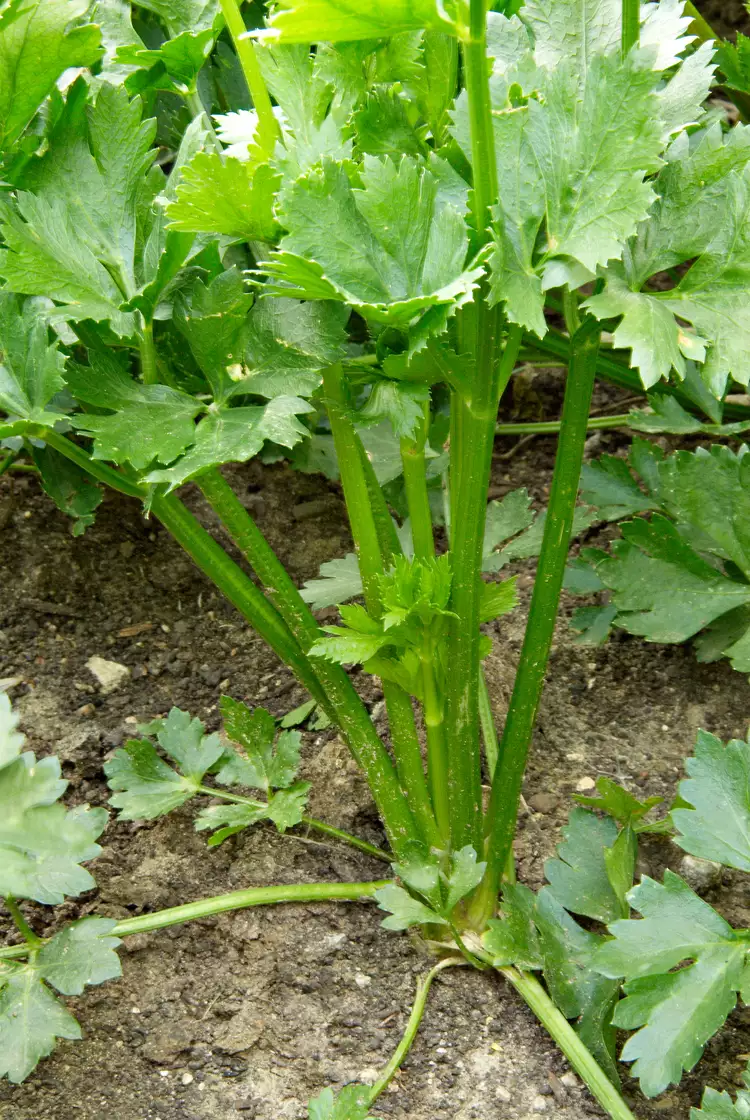
Just-picked crisp celery from your garden is as close to fresh as you can get. Homegrown celery is often darker in color and slightly smaller than the commercial varieties available at the grocery store. Celery (Apium graveolens) takes a long time to grow—around four and a half months—and is a cool-weather crop. Plan to sow seeds in early spring for a late summer harvest or in the fall for an early spring harvest, depending on your climate. Here’s how to grow celery in your garden.
Celery Overview
| Genus Name | Apium graveolens |
| Common Name | Celery |
| Plant Type | Vegetable |
| Light | Part Sun, Sun |
| Height | 18 to 24 inches |
| Width | 8 to 18 inches |
| Flower Color | White |
| Foliage Color | Blue/Green |
| Zones | 10, 11, 2, 3, 4, 5, 6, 7, 8, 9 |
| Propagation | Seed |
Where to Plant Celery
Plant celery in an area of your garden that gets plenty of sunshine—at least six hours daily. Celery grows best in well-draining soil with a lot of compost or aged manure added. It needs consistently moist soil for tender and crisp stalks.
How and When to Plant Celery
Grow celery from seed sown indoors about two to three months before the last frost in spring in your area to get a head start. For a fall crop, start seeds indoors two to three months before the first fall frost in your area. Typically, celery seedlings are hardened off and transplanted when they have three or four leaves and the roots are well-established. Celery takes about four and a half months to reach maturity. If you want to harvest sooner, choose a fast-maturing variety. Space celery transplants 1 foot apart, as a tight planting encourages it to grow tall and produce long petioles.
Celery Care Tips
Celery is easy to grow when you meet its growing requirements.
Light
Celery thrives in full sun with a minimum of six hours of sun daily. It benefits from some shade during the hottest part of the day.
Soil and Water
Celery does best when grown in well-draining soil with a pH of 5.8 to 6.8. Amending the soil with organic matter, such as aged manure or compost, adds important nutrients.
Celery likes consistently moist soil and tends to be thirsty, so be attentive to the soil moisture and provide adequate water. If it doesn’t receive sufficient water, the celery develops stringy, tough, or small stalks. Celery needs around 1 to 2 inches of water per week.
Temperature and Humidity
Celery is a cool-season vegetable. Plant celery outside once soil temperatures are 50°F or higher, and temperatures don’t go below 40°F at night. Celery that is exposed to colder weather can go to seed. Celery needs high humidity levels to remain crisp.
Fertilizer
Celery benefits from ample compost in the soil. A month after transplanting, fertilize celery by adding 1 tablespoon of 5-10-10 fertilizer about 3 to 4 inches from each celery plant, following the product’s instructions.
Pests and Problems
Celery is prone to several pests and diseases. Being proactive and checking the plants frequently is the best prevention.
Aphids, carrot rust flies, earwigs, and flea beetles are common pests that bother celery. Aphids leave secretions on the leaves, so check for a wet or sticky film, as they can cause leaves to turn yellow. Flea beetles snack on the foliage, leaving small holes. Nematodes can cause root gall, which is the deformation and swelling of the roots.
Celery is susceptible to celery mosaic, bacterial blight, and damping-off.
How to Propagate Celery
Celery is usually propagated by seeds. Sow them indoors a couple of months before the last frost in your region. The seeds are tiny and need to be soaked overnight in warm water to help with the germination process. Sow the seeds indoors by pressing them into potting soil in seed flats or pots without covering them up with soil. Cover the pot or tray with plastic wrap to keep in the moisture. They typically germinate within a week, but the process can take as long as three weeks. When the seedlings are about 2 inches tall, they can be transplanted to bigger pots.
Harvesting Celery
Harvest celery when the lower stalks are at least 6 inches long. Depending on the variety, some celery stalks can reach 18 inches. You can also harvest individual stalks by cutting them at the crown of the plant with a knife or shears.
Types of Celery
‘Conquistador’
Apium graveolens ‘Conquistador’ is a celery variety that can handle heat and grow in soil with insufficient moisture. It grows to 24 inches tall and exhibits a tolerance to bolting. It is so versatile that it can be grown year-round in many areas.
‘Tango’
Apium graveolens ‘Tango’ is a celery variety with smooth, sweet-flavored stalks that reach maturity in 85-90 days. This fast-growing celery grows to 20 inches tall and is perfect for areas with short growing seasons.
‘Utah 52-70 R Improved’
Apium graveolens ‘Utah 52-70 R Improved’ is dark green and matures in cooler temperatures. The 30-inch-tall plant produces stalks up to 12 inches tall. This variety is best planted in late summer and matures in 98 days.
‘Afina’
Apium graveolens ‘Afina’ is a cutting celery with dark green foliage on 20-inch-tall plants. It is grown for its flavorful leaves and seeds rather than stalks. In the kitchen, it is used as an herb. This variety matures in only two months—about half the time as most types of celery.
Celery Companion Plants
The best companion plants for celery are those that share the same light, soil, and water requirements.
Cucumbers
Celery and cucumbers both need a lot of water to grow and thrive, so they make good gardening pals when planted together. Cucumbers are vining plants; if you use a trellis for them to climb, they can create shade for the celery plants.
Mint
Growing mint alongside celery can help reduce pests. Mint is known to repel aphids, flea beetles, and white flies. Plant it in a contained spot, such as a pot. Mint will grow aggressively, quickly taking over a garden space.
Marigolds
Marigolds are a sought-after flower for deterring pests by being a trap crop, drawing pests to themselves and away from celery. Marigolds keep slugs, snails, and thrips at bay so your celery can grow.
Spinach
Spinach and celery are cool-season crops that need fertile, well-draining soil with plenty of amendment. They have similar watering needs, too; they both like moist soil.