
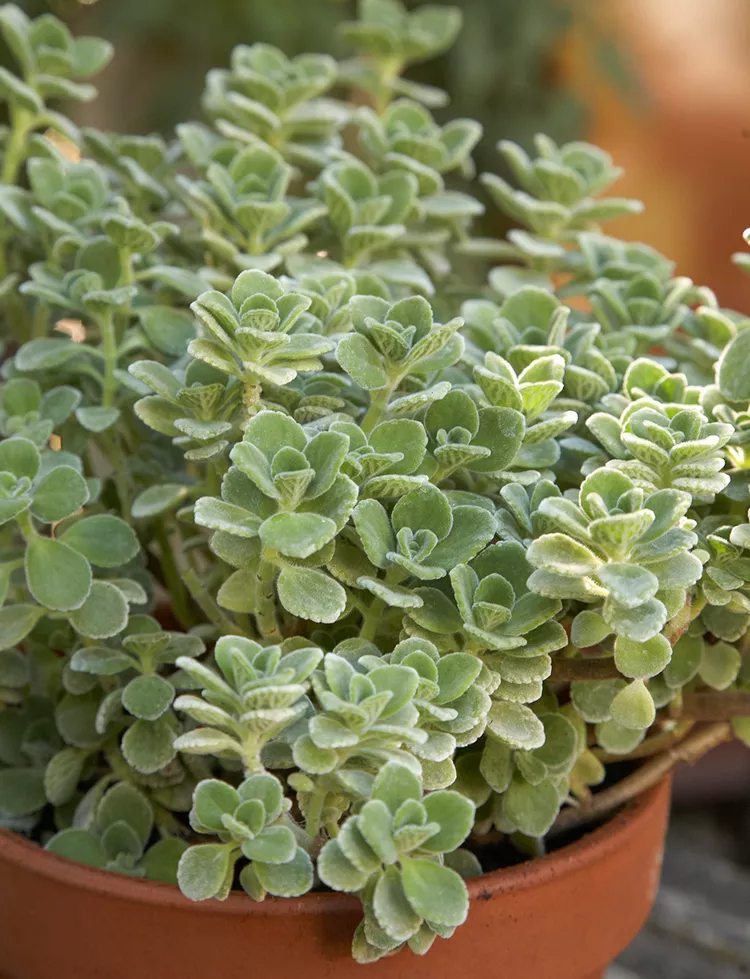
With common names that include Mexican mint, Spanish thyme, and Indian borage, Cuban oregano leaves many gardeners wondering exactly what it is when they encounter it at a garden center. Let's start with what it is not. Cuban oregano isn't actually oregano, or even mint, thyme, or borage. Formerly classified as Plectranthus amboinicus, it is now classified as Coleus amboinicus. Yes, it is now technically a type of coleus.
This herb is perennial in tropical regions but is most commonly grown as an annual or container plant elsewhere. It has fragrant, velvety leaves edged in white and trumpet-shaped flowers in pink, white, and lavender. It grows rapidly, creating a lush display in a container garden.
Cuban oregano bears a strong menthol or camphor scent that intensifies when the leaves are crushed, so use this powerful seasoning carefully.
This Coleus amboinicus species can be safely consumed by humans but is toxic to dogs, cats, and horses.
Cuban Oregano Overview
| Genus Name | Coleus amboinicus |
| Common Name | Cuban Oregano |
| Plant Type | Herb |
| Light | Part Sun, Sun |
| Height | 1 to 3 feet |
| Width | 2 to 3 feet |
| Flower Color | Pink, Purple, White |
| Season Features | Summer Bloom |
| Special Features | Fragrance, Good for Containers, Low Maintenance |
| Zones | 10, 11 |
| Propagation | Division, Stem Cuttings |
| Problem Solvers | Drought Tolerant |
Where to Plant Cuban Oregano
Cuban oregano grows well in part-shade areas such as porches, patios, or courtyards that receive a few hours of morning light. It also grows well in containers alongside other part-shade plants like begonia, impatiens, fuchsia, and coleus. The plant prefers hot, dry conditions and is winter-hardy only in Zones 10 and 11.
Cuban oregano blooms in late winter to mid spring in tropical areas. Don't expect to see blossoms in cool regions, where it's grown only for a single season, like an annual. This perennial is frost-tender and must be protected when temperatures dip below 40°F. In that case, move any potted plants inside and cover ground plants with a plastic sheet.
How and When to Plant Cuban Oregano
In the spring, plant Cuban oregano seedlings in the garden in an area that receives partial sun or part shade and has sandy, well-draining soil or potting soil. In all but the warmest regions, plant Cuban oregano in a container to bring it in well before freezing temperatures arrive. In either case, plant the seedlings at the same level they were in the nursery container.
Cuban Oregano Care Tips
Light
In the garden, Cuban oregano grows best in a part-sun or part-shade location. Inside the house, it grows best in a bright, sunny window but tolerates less light if needed.
Soil and Water
Whether planted in the garden or a container, this drought-tolerant plant does best in sandy, well-drained soil. Water it once a week.
Temperature and Humidity
Cuban oregano doesn't tolerate temperatures colder than 40°F. Plan to bring it inside before the outdoor temperature cools. It also can be grown as a tropical houseplant all year round. It loves humidity. Indoors, mist the plant or use a humidifier if the humidity is low in the winter.
Fertilizer
Feed Cuban oregano with an all-purpose fertilizer about once a month. For the amount to use, follow the product label instructions.
Pruning
This fast-growing plant will outgrow its container after a few months. Trim back the foliage at any time of year by one-third to keep the plant attractive.
Potting and Repotting Cuban Oregano
If the Cuban oregano grows too large for its current container, repot it in a container that is an inch or two larger in diameter. Select a container with drainage holes and fill it with rich, well-draining potting soil or a cactus/succulent planting mix with a pH between 6.0 and 7.5.
Pests and Problems
Thanks to its pungent odor, Cuban oregano doesn't attract many insects. However, spider mites and mealy bugs are attracted to the plant, so keep an eye open for those. Spray the plant with neem oil every day or two if you see an infestation.
How to Propagate Cuban Oregano
If you or a friend already have a Cuban oregano plant, you can propagate cuttings quickly in your kitchen window with stem cuttings. Cut a 4- to 6-inch cutting of new growth from the plant. Remove the leaves from the bottom half of the cutting and drop the cutting in a glass or jar of water—preferably a clear glass so you can see when it roots. Put it on a sunny windowsill and change the water every couple of days.
In two to four weeks, when you see roots in the water, gently transfer the cutting to a 6-inch deep pot filled with potting mix. Cover all the roots and some of the stem where you removed the leaves. Tamp down the potting mix, water it, and put it back on the sunny windowsill or a similar protected area for a couple of months until the plant shows new growth. Don't move it outside until the temperatures stay above 60°F.
You can also divide mature clumps of Cuban oregano in the garden using a sharp shovel and immediately plant them in the garden or in a container.
Types of Cuban Oregano
'Cerveza 'n Lime' Cuban Oregano
This hybrid variety of Cuban oregano has fragrant, silvery green leaves. It does well in containers indoors or outside. It vigorously grows about a foot tall and wide. Zones 9-11.
'Ochre Flame' Cuban Oregano
'Ochre Flame' is a highly ornamental variety of Cuban oregano with green leaves splashed with an irregular central patch of pale lime. The leaves have scalloped and wavy edges. In winter, the plant produces small lavender-pink blooms. It grows about 12 inches tall and wide.